


MAGNI
Magni 565
This process, based on zinc mikrolamel, was developed by Magni Group Inc. in the USA and its use is today worldwide. This is the replacement for the popular finish, Dorrit.
Magni 565 is entirely free from chromium and consists of the inorganic, zinc-rich bottom layer B46 and upper organic layer B18 containing aluminum. This technology offers barrier protection against corrosion and is designed to impart a particularly outstanding bimetallic corrosion resistance. Unlike commonly used methods of plating, non-electrolytic coating layer surface eliminates the formation of hydrogen embrittlement.
Besides the outstanding corrosion protection, Magni 565 already contains a lubricant to reduce the need of surface lubricants.
Visual Appearance
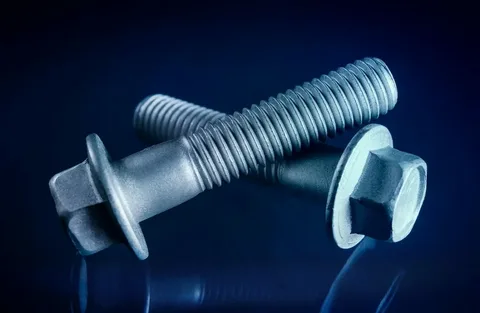
Magni 565 has a pleasant silver–grey appearance. On request we can offer other colours.
Technical specification
Salt spray test (ASTM B117): 840 hours.
K-Faktor (USCAR torque / tension): 0,17±0,03.
FROM 946 coefficient of friction: 0,13±0,03.
Humidity / Adhesion (GM4465P/GM9071P): satisfactory.
Layer thickness: ca.. 15 µm.
Main advantages
• reduced environmental impact as it does not contain chromium
• acts as a protection against atmospheric corrosion
• provides exceptional galvanic corrosion protection of aluminum parts
• resistant to electrolytic and chemical damage
• resistant to automotive fuels and gases, non-electrolytic deposition of coatings rich in zinc mikrolamely
• method of application does not cause hydrogen embrittlement
• recommended for threaded fasteners
• can be applied to screws and nuts without worrying about scuffing or other mechanical problems
• suitable for connecting M6 threads and more
Specifications
• WSS-M21 P37-A1 (Ford Motor Co.) (S439)
• VCS 5737, 19 (Volvo)
• TL233 (VW)
• GMW3359 (Generál Motors)
• PS 10378, PS 10633 (Daimler Chrysler)
• DX 55801 (Delphi)
• TS 2-25-60 Class A (TRW)
• P91 (Arvin Meritor)
• GM (GM7114M)
and more.
Application methods
A thorough cleaning of the surfaces is required prior to application. Unlike other coatings, it does not require phosphating of zinc. Application is carried out in three ways:
1. Dip spin - Bulk application by soaking in a basket and spinning excess paint. This process repeats twice to ensure a uniform layer and the solid surface.
2. Dip drain - For larger parts the suspension method is used, which involves wetting followed by centrifugation to remove excess paint colours.
3. Spraying - Uses traditional robotic spray technology. This method is used for partial treatment of larger parts, such as brake discs, and also for the uniform surface treatment of recessed portions at risk of fouling paint.
After each of the above procedures, thermal treatment follows for surface hardening.